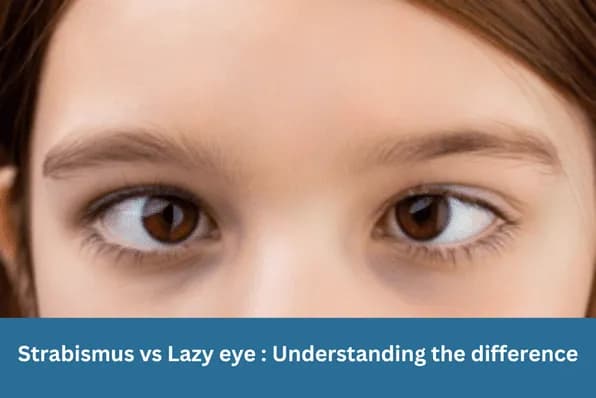
Strabismus and lazy eye are two of the most commonly confused eye conditions, yet they differ significantly in their causes, symptoms, and treatment approaches. Understanding these differences is essential for parents, patients, and carers seeking the right diagnosis and care.
What is Strabismus?
Strabismus, also known as “crossed eyes” or eye misalignment, is a condition where the eyes do not point in the same direction. One eye may turn inward, outward, upward, or downward while the other focuses straight ahead. It can affect one or both eyes and may occur constantly or intermittently.
Signs and Symptoms of Strabismus
- • One or both eyes appear misaligned or point in different directions
- • Double vision (diplopia)
- • Difficulty with depth perception
- • Squinting or closing one eye in bright light
- • Trouble with reading or focusing on objects
Causes of Strabismus
- • Muscle imbalance — the eye muscles controlling movement are unbalanced and cannot coordinate properly
- • Nerve issues — malfunctioning nerves that control eye muscle movement
- • Genetic factors — a family history of strabismus increases the likelihood of the condition
- • Health conditions — cerebral palsy, Down syndrome, and neurological disorders can contribute to strabismus
What is Lazy Eye (Amblyopia)?
Amblyopia, commonly known as lazy eye, is a vision development disorder in which one eye has poor vision compared to the other. Unlike strabismus, amblyopia involves the brain favouring one eye over the other, causing the weaker eye to become underdeveloped. The eyes may appear normal in alignment.
Symptoms of Lazy Eye
- • Reduced vision in one eye despite the use of corrective eyewear
- • Difficulty with detail-dependent tasks such as reading or seeing fine details
- • Squinting or tilting the head to compensate for the weaker eye
- • A noticeable difference in vision strength between the two eyes
Causes of Lazy Eye
- • Strabismus — the leading cause, where the brain ignores signals from the misaligned eye to avoid double vision
- • Refractive errors — significant differences in prescription needs between the two eyes
- • Cataracts or other vision problems — conditions that reduce clear vision in one eye during early development
- • Blocked vision during early childhood — such as ptosis (drooping eyelid) or other obstructions affecting visual development
Key Differences Between Strabismus and Lazy Eye
While the two conditions are related and can occur together, they are fundamentally different:
| Strabismus | Lazy Eye (Amblyopia) | |
|---|---|---|
| Definition | Eyes are physically misaligned | Vision impairment from brain ignoring weaker eye |
| Eye Alignment | Eyes turn in different directions | Typically normal alignment; brain favours one eye |
| Primary Cause | Muscle imbalances or nerve issues | Brain favouring one eye, causing underdevelopment |
| Vision Impact | Double vision, poor depth perception | Weaker vision in one eye despite normal eye structure |
| Treatment | Glasses, eye exercises, or surgery to realign | Patching stronger eye, corrective lenses |
Can Strabismus Lead to Lazy Eye?
Yes, strabismus can lead to lazy eye, especially in children. If strabismus is not treated early, the brain may begin to ignore the signals from the misaligned eye, leading to amblyopia. This is why early diagnosis and prompt treatment of strabismus is so important — it can prevent the secondary development of lazy eye and preserve long-term vision in both eyes.
Concerned about strabismus or lazy eye?
Dr Parth Shah specialises in strabismus and amblyopia in both children and adults. Book a consultation at our Braddon, Canberra clinic.
Treatment for Strabismus and Lazy Eye
Treatment for Strabismus
- • Glasses — correcting refractive errors can improve eye alignment in some patients, particularly children with accommodative esotropia
- • Prism lenses — used for smaller misalignments that are causing double vision
- • Surgery — adjusting the eye muscles when other treatments have not been sufficient to achieve proper alignment
Treatment for Lazy Eye
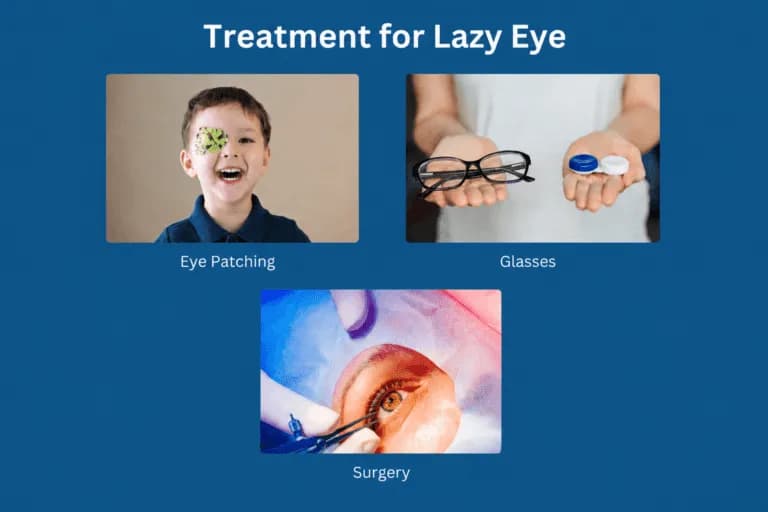
- • Patching — covering the stronger eye with a patch encourages the weaker eye to work harder and develop better vision
- • Glasses — correcting refractive errors to improve vision in the affected eye and support binocular function
- • Surgery — treating underlying causes such as cataracts or eyelid drooping (ptosis) that are blocking vision in the weaker eye
When to Seek Treatment?
Early intervention for both strabismus and lazy eye is essential for the best outcomes. The earlier these conditions are diagnosed and treated, the better the chances of preserving full visual function and preventing long-term vision problems. Regular eye examinations — particularly for children from infancy through school age — are the most reliable way to detect these conditions early.
If you notice any signs of misaligned eyes, squinting, or differences in vision between your child's eyes, consult an eye specialist as soon as possible.
Conclusion
Strabismus and lazy eye are distinct conditions: strabismus involves physical eye misalignment, while lazy eye results from the brain ignoring signals from the weaker eye. Both conditions respond well to appropriate treatment, especially when identified early. If you or your child are experiencing any of the symptoms described, we encourage you to consult with our eye specialists at Clarity Eye Surgeons promptly.
Frequently Asked Questions
Treatment is most effective in childhood, though adults may benefit from vision therapy, patching, or corrective lenses depending on the severity of the condition. Research shows that some improvement is possible in adults, though results are generally more modest than in children.

Written by
Dr Parth ShahDr Parth Shah is Director and principal ophthalmologist at Clarity Eye Surgeons in Canberra, specialising in strabismus surgery, cataract surgery, and paediatric ophthalmology. Known for his extensive training, successful surgical outcomes, and commitment to patient education, Dr Shah is a trusted and respected voice in Canberra ophthalmology.
Book An Appointment Today
Early treatment makes a significant difference for strabismus and lazy eye. Book a consultation with Dr Parth Shah at Clarity Eye Surgeons, Braddon, Canberra.